5 Nervous System Grounding Steps for Kundalini Awakening Support


If your energy feels chaotic, your sleep has fallen apart, or you suspect you’re going through a kundalini awakening, the first move is not more spiritual practice. It’s stabilisation: ground your nervous system, pause anything that intensifies sensation, and reach out to someone who understands what’s happening. If you can’t function day to day, treat this as urgent and contact a trauma-aware therapist or crisis service. Peer groups and skilled practitioners come next.
TL;DR:
Grounding and stabilizing the nervous system are essential before attempting advanced spiritual practices during a kundalini awakening.
Urgent symptoms such as suicidal thoughts, severe dissociation, or an inability to function require immediate professional medical or crisis intervention.
Typical awakening signs include energy surges, disrupted sleep, heightened sensitivities, and emotional volatility, which can fluctuate between expansive and contractive states.
Long-term support benefits from a combination of peer groups, trauma-aware therapists, and gradual pacing to avoid escalation and promote integration.
Energy work can assist recovery only after establishing a stable baseline; it should complement clinical care and never replace urgent medical treatment.
Table of Contents
What is a kundalini awakening, and why does it feel different for everyone?
A kundalini awakening describes an energetic shift, sometimes gradual, sometimes sudden, that produces psychological and physical effects as dormant energy moves through the body. Some people notice subtle mood changes and vivid dreams over months. Others get hit overnight with racing thoughts, tremors, or a sense that reality has cracked open.
That range is normal, not a sign you’re doing it wrong. Presentations typically fall somewhere along this spectrum:
Subtle: shifts in intuition, mild energy sensations, more vivid dreaming
Moderate: emotional volatility, physical tingling or heat, disrupted sleep
Intense: overwhelming sensory input, altered perception, panic or dissociation
Carl Jung offered a useful, non-spiritual lens here. He linked kundalini-type experiences to psychological individuation and warned against rushing activation without proper mental preparation. You don’t need to believe in energy centres to find that framing helpful. It simply says: big internal shifts need time and grounding, not speed.
What are the common signs, and which ones mean get help now?
Most people report a cluster of physical and emotional symptoms that build gradually before easing off. Recognising the pattern helps you respond calmly rather than panic at every new sensation.
Typical signs include:
Sudden energy surges or waves of heat moving through the body
Disrupted or reduced sleep
Heightened sensitivity to light, sound, or other people’s emotions
Emotional reactivity, including crying or anger with no clear trigger
A rise in synchronicities or a sense of heightened meaning in ordinary events
Symptoms tend to cluster in two directions. Expansive symptoms feel energising, even euphoric, though they can tip into mania-like overstimulation. Contractive symptoms feel collapsing: fatigue, fear, numbness, or withdrawal. Neither is “better”, and most people move between both.
Some signs need immediate attention rather than patient observation: suicidal thoughts, an inability to eat, sleep, or work for several days, dissociation severe enough that you lose track of time or place, or psychotic symptoms such as hearing voices that direct your behaviour. These symptoms require urgent medical or emergency care, such as contacting a GP, crisis line, or accident and emergency, rather than self-help methods like breathing exercises.
Grounding practices you can use right now
Grounding works because it gives an overloaded nervous system something predictable to hold onto. The nervous-system-first approach prioritises regulation over activation. That means the goal right now is calm, not more spiritual momentum.
Five practices worth trying today:
Rebuild rhythm first. Regular sleep and meal times, even imperfect ones, do more for a dysregulated system than any single technique.
Use sensory anchors. Cold water on the wrists, textured objects to hold, or bare feet on grass pull attention back into the body.
Practise breath awareness, not breath control. Notice the breath without lengthening, holding, or forcing it.
Move gently. A slow walk or stretching discharges excess energy without adding stimulation.
Reach for social co-regulation. A calm friend, a call, or simply being near another regulated person settles the body faster than solitude does.
Avoid forced breathwork, breath retention, or intensive visualisation while you’re in acute intensity. These techniques can push arousal higher rather than lower it when the system is already flooded. Isolation is another trap: it feels protective but tends to amplify fear.
Pro Tip: Keep a short, boring routine on hand for bad moments: same tea, same chair, same five minutes of stillness. Predictability is doing the calming work, not novelty.
For a fast option when things spike, a 60 second somatic grounding exercise gives you something concrete to do before thoughts spiral further.
When should you pause or scale back spiritual practices?
Pull back when symptoms intensify rather than settle, when sleep or eating has been disrupted for more than a couple of days, or when you feel disconnected from ordinary reality. Advanced practices assume a stable baseline; pushing through without one usually backfires.
A simple pacing sequence:
Stop or reduce advanced techniques (intensive meditation, breathwork, kundalini yoga) until symptoms settle.
Alternate rest with light activity rather than forcing daily practice.
Treat fatigue as information, not failure. Let insights integrate before chasing the next experience.
If things escalate into crisis: pause everything, ground yourself with a sensory anchor, contact someone you trust, and if you’re unable to function or feel unsafe, seek trauma-aware professional help or emergency services without delay.
Where can you find ongoing kundalini awakening support?
Long-term stability tends to come from combining three things: people who’ve been through it, a clinician trained to work with intense states, and a clear escalation route if things get worse.
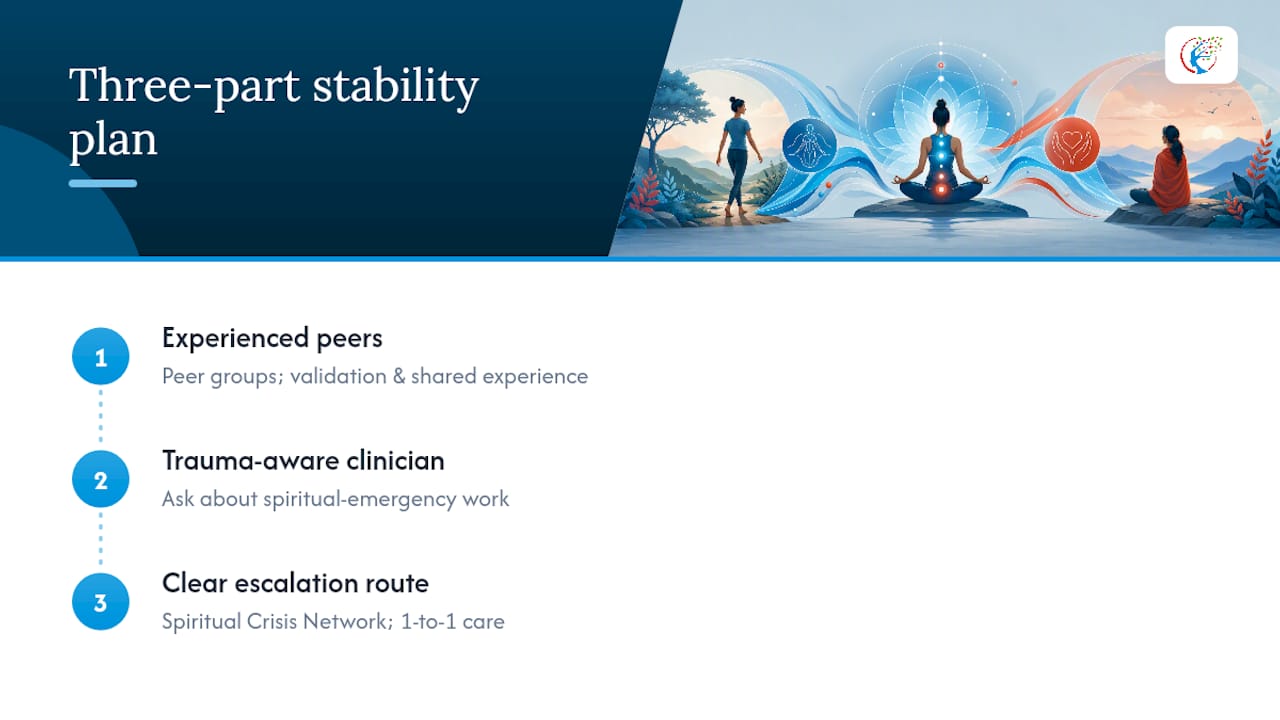
Peer groups matter more than most people expect. Organisations such as the Kundalini Collective run regular meetings, both online and in person, where people share what actually helped them cope. That kind of validation, hearing “yes, that happened to me too”, cuts through the isolation that makes symptoms feel scarier than they are.
For professional support, look specifically for trauma-aware or nervous-system-informed therapists rather than a generalist. Before booking, ask directly: have you worked with clients describing spiritual emergency or kundalini-type experiences? Do you take a body-based, polyvagal-informed approach, or purely talk therapy? Their answer tells you quickly whether they’ll understand what you’re describing.
When symptoms threaten your ability to function, spiritual-crisis networks such as the Spiritual Crisis Network offer a bridge between peer understanding and clinical care, and some Kundalini Collective facilitators offer one-to-one sessions for people who need more individual attention than a group setting provides.
A practitioner’s perspective on where energy work fits
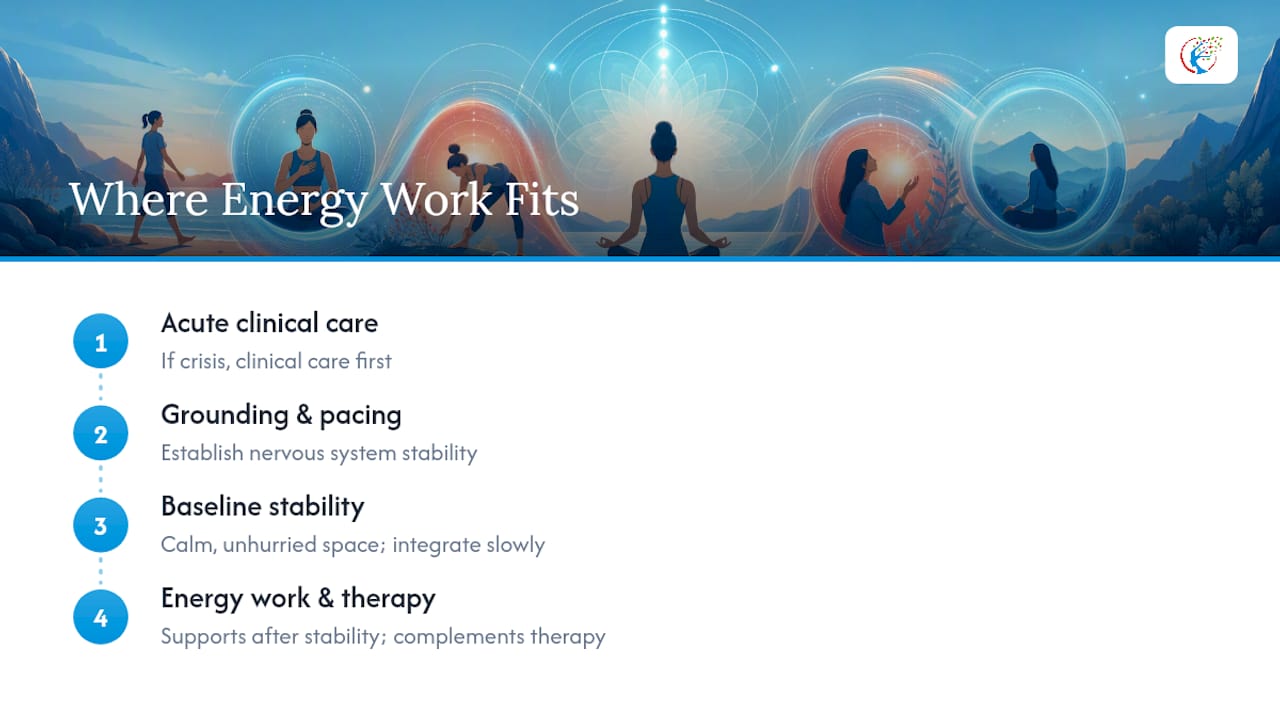
Kundalini awakening sits at an uncomfortable junction: too physical for most spiritual guides, too unfamiliar for most GPs. That gap is where people fall through, and it’s why grounding and pacing have to come before anything else, regardless of how meaningful the experience feels.
Quantum Healing Hypnosis and energy healing can support someone through this process, but only once the nervous system has some baseline stability. The work I do focuses on creating a calm, unhurried space and pacing sessions to what a client can actually integrate, not pushing toward insight for its own sake. It complements trauma-aware therapy; it doesn’t replace it. If someone is in acute crisis, unable to sleep or function, clinical care comes first, always. Energy work has its place once the ground beneath someone’s feet is steadier.
— Paul
Want one-to-one support? Here’s how sessions with Paul work
Sessions can be designed specifically for people navigating intense spiritual shifts, rather than generic relaxation. If you’ve stabilised the acute symptoms and want deeper support, whether that’s QHHT, regression hypnotherapy, or energy healing combining Reiki and chakra balancing, these sessions are designed for people processing exactly this kind of experience, in person or remotely.

A first session usually starts with a conversation about what you’re experiencing and what pace feels manageable, before any hypnosis or energy work begins. Sessions are paced to what you can integrate that day, not rushed toward a dramatic breakthrough. This sits alongside clinical care rather than instead of it: if you’re in acute crisis, a therapist or crisis service comes first.
If that sounds like the right next step, visit Paulstebles to see how sessions run and book a consultation.
Useful resources for ongoing support
Kundalini Collective peer support: meetings, community, and crisis signposting
Nervous-system-first grounding guide: practical stabilisation steps
Root chakra grounding routines: short daily exercises
Trauma-informed therapy online: professional, body-aware clinicians
Sources
FAQ
What are the seven stages of kundalini awakening?
Different traditions describe this differently, and there’s no single agreed sequence. Rather than chasing a fixed stage model, focus on what you’re actually experiencing right now and whether your nervous system is regulated or overwhelmed.
How do you unblock kundalini energy safely?
Prioritise grounding and nervous-system regulation before any technique aimed at “unblocking” energy, since forcing movement through breathwork or intensive visualisation can increase dysregulation rather than resolve it. Gentle movement, rhythm, and social co-regulation tend to help more than intensive practice.
What did Carl Jung say about kundalini?
Jung framed kundalini-type experiences as part of psychological individuation, the process of integrating unconscious material into conscious life. He cautioned that activating these energies without adequate mental preparation could cause real difficulty.
How rare is a full kundalini awakening?
There’s no reliable figure for how common full awakenings are, partly because definitions vary so widely between traditions and individuals. Milder, partial experiences appear to be considerably more common than the dramatic, sudden version often described in spiritual literature.
When should I seek emergency help during a kundalini awakening?
Seek emergency help immediately if you have suicidal thoughts, can’t eat, sleep, or function for several days, or experience dissociation severe enough to lose track of time or place. These symptoms need a GP, crisis line, or accident and emergency, not a self-help technique.
Recommended
Comments