60 second somatic grounding: evidence-based emergency steps to calm your body

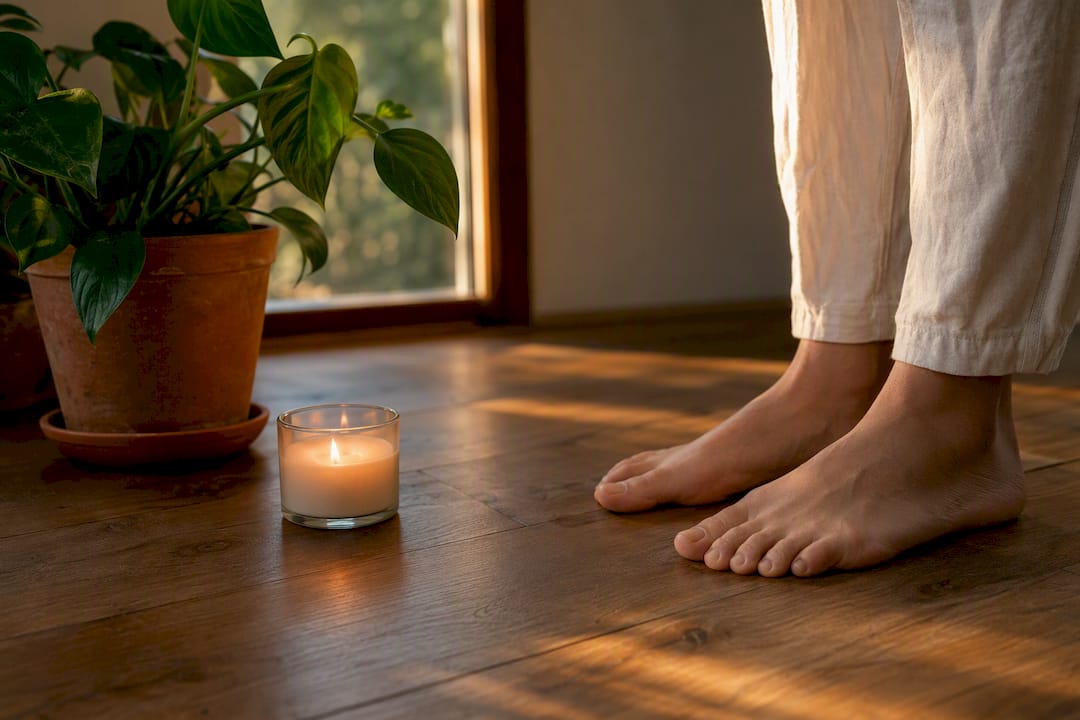
Somatic grounding uses body sensations, not thoughts, to calm an overwhelmed nervous system. The fastest version: press your feet firmly into the floor and take three slow exhales, each longer than the inhale. Use it the moment anxiety spikes, when you feel dissociated, or when an emotion feels too big to think your way out of.
TL;DR:
External orienting techniques, like naming objects, are safer for dissociation or flashbacks, while proprioceptive input is more effective for heightened arousal.
The most effective exercises vary by state: sensory scans for dissociation, breath patterns for racing thoughts, and movement or cold contact for excess activation.
Cold water or ice contact triggers a rapid heart rate slowdown but should be avoided by individuals with cardiac conditions.
Practising grounding techniques regularly for a few minutes daily builds neural familiarity, making them quicker to use during high-stress moments.
Grounding is not enough for severe or persistent symptoms, which require professional intervention, especially if symptoms include self-harm thoughts or intense trauma reactions.
Table of Contents
What is somatic grounding and why does it work?
Somatic grounding works from the body upward rather than the mind downward. Where cognitive techniques ask you to reframe a thought, somatic techniques give your nervous system a physical signal, contact with the floor, a slower breath, cold water on skin, that tells it the danger has passed.
That signal matters because anxiety and dissociation are largely automatic. Your autonomic nervous system runs two competing branches: sympathetic (fight or flight) and parasympathetic (rest and digest). When you’re flooded, you’ve usually left your “window of tolerance,” the zone where you can think clearly and respond rather than react. A review of somatic interventions found that body-based techniques measurably shift nervous-system arousal and improve symptoms in people dealing with trauma and chronic stress, largely through proprioceptive and vagal pathways rather than conscious reasoning.
Stress research backs this up more broadly. The American Psychological Association’s overview of stress and the body shows how strongly physiological stress responses show up in muscles, breath, and heart rate, and how body-based inputs can interrupt that response rather than just manage it mentally.
In practice, this gives you a simple selection rule:
If you feel spaced out or unreal, choose an external orienting technique first, naming what you see or feel around you, before trying anything internal.
If you feel wired or panicky but present, proprioceptive input (feet, weight, pressure) usually works faster than breathing alone.
If your thoughts are racing but your body feels calm enough, breathwork alone may be sufficient.
Somatic experiencing, the wider therapeutic approach this draws from, treats the body as data. Grounding exercises are the accessible, self-directed slice of that idea.
What are the best somatic grounding exercises to try right now?
Different states call for different inputs. A racing mind responds to breath. A dissociated, foggy state responds to sensory orientation. A body that’s tense and buzzing responds to movement or pressure. Here’s a toolkit organised by what you’re actually feeling, with public-friendly versions built in.
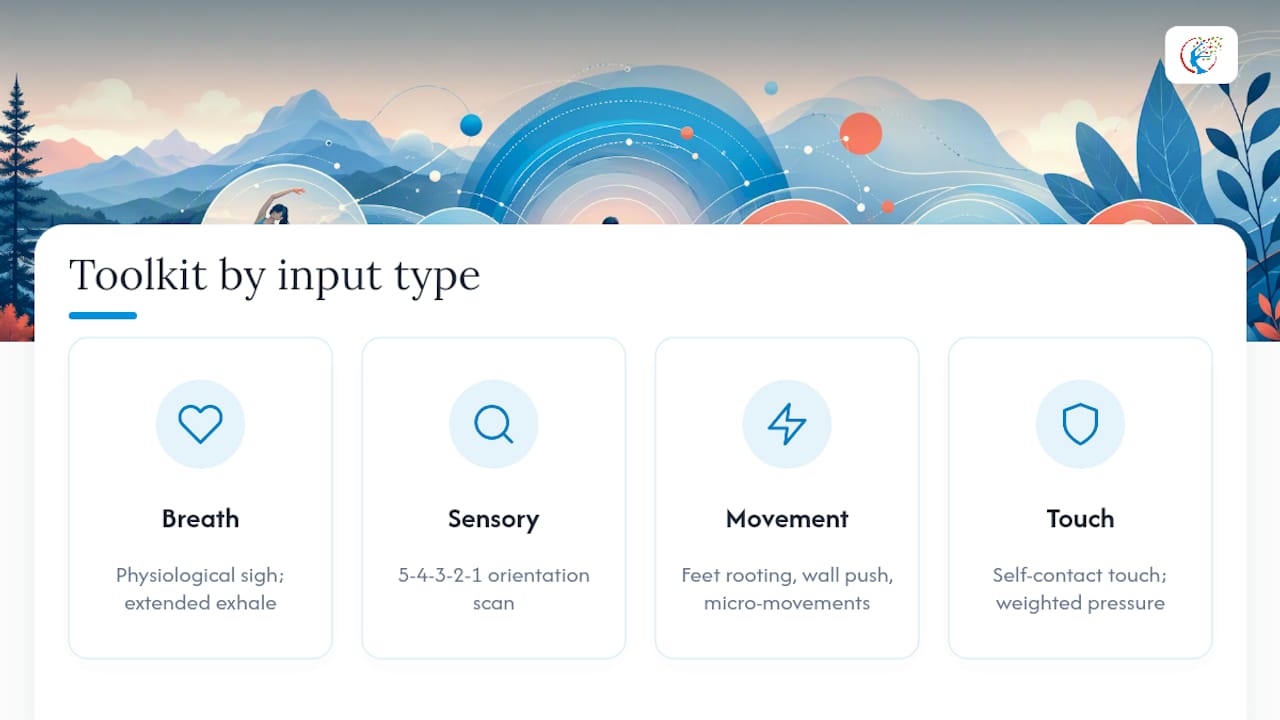
1. The 5-4-3-2-1 sensory scan
This is the standard entry point for grounding techniques because it needs no equipment and works almost anywhere.
Name, out loud or silently, five things you can see, four you can hear, three you can touch, two you can smell, and one you can taste. Take your time on each one; rushing defeats the purpose. The whole sequence takes about a minute and works well for dissociation or the sense of “not being here.”
Public variant: Do it silently, resting your eyes on ordinary objects, a mug, a door handle, a coat sleeve, rather than announcing what you’re doing. Nobody around you will know.
2. Physiological sigh and extended exhale
Breathe in through your nose, take a second short top-up inhale, then exhale slowly through your mouth for twice the length of the inhale. Repeat several times. This pattern activates the vagus nerve directly and tends to lower heart rate within 30 to 60 seconds, faster than standard deep breathing, according to guidance summarised in Mayo Clinic’s patient handout on grounding and anxiety. A simple 4-second inhale, 6 second exhale count works nearly as well if the sigh feels awkward.
3. Feet-rooting and wall push
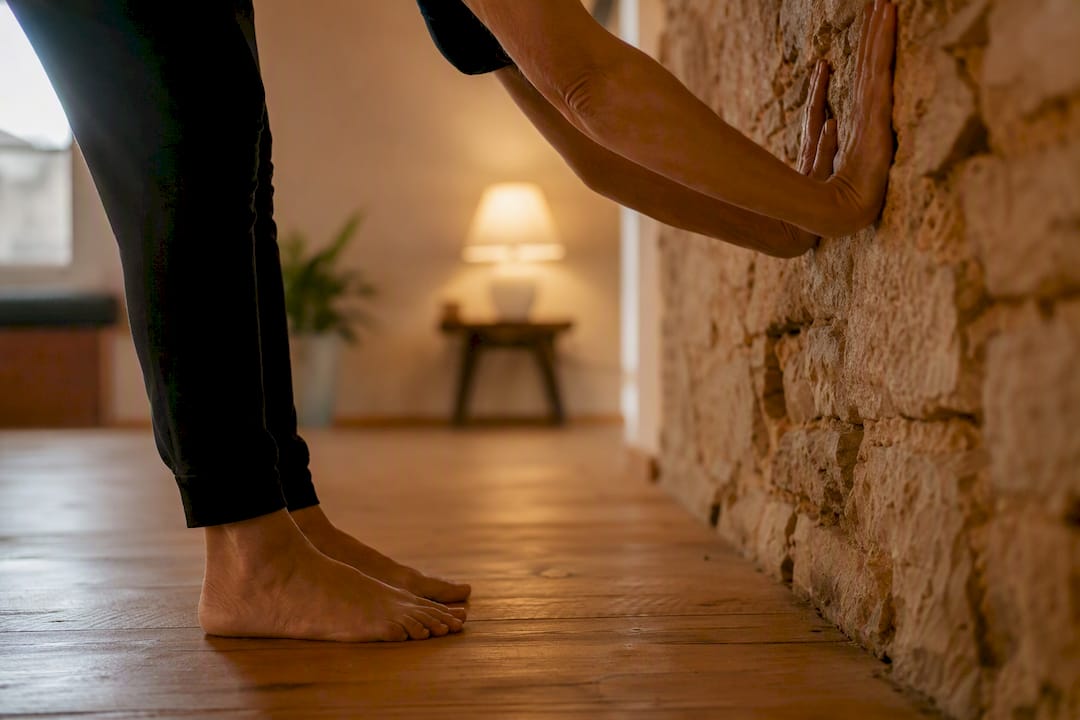
Stand or sit, press both feet flat into the floor, and notice the actual contact points, heel, arch, toes. Push down for a few seconds, release, repeat several times. If you’re near a wall, press your palms or your back against it and push steadily for ten seconds. This proprioceptive input gives the nervous system fast, unmistakable feedback, which is why it often works when breathing alone doesn’t land. It’s also entirely invisible if you’re standing in a queue or sitting in a meeting.
4. Weighted or self-contact touch
Cross your arms and rest your hands on your opposite upper arms, then apply gentle, firm pressure. This is the discreet form of the “butterfly hug” used in trauma-informed practice: alternate light taps on each arm for 30 seconds. A weighted blanket or even a heavy bag on your lap does something similar at home. The point is steady, even pressure, not stimulation.
5. Micro-movements and gentle shaking
If breath and stillness feel useless, that’s often a sign your body has excess activation it needs to discharge, not calm. Roll your shoulders, shake out your hands for ten seconds, or gently bounce on your heels. This is sometimes called pendulation, moving attention or movement gently between tension and ease rather than forcing stillness. Keep it small and slow; this isn’t about working up a sweat, and if it makes you feel worse, stop and switch to stillness-based grounding instead.
6. Cold water or ice contact
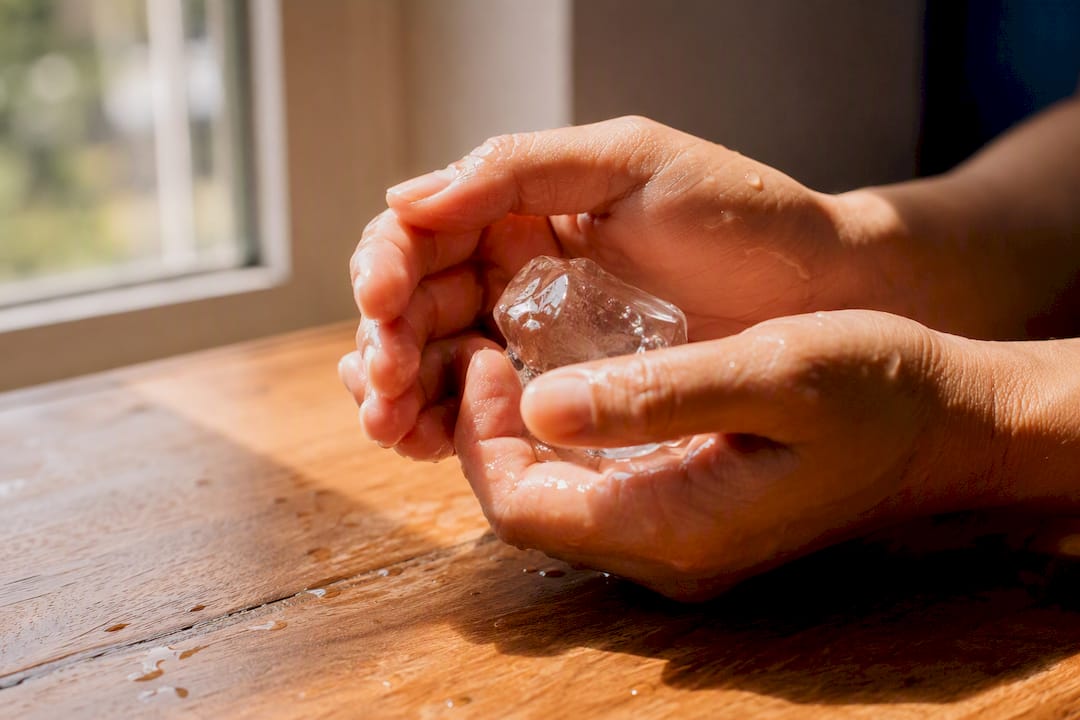
Splashing cold water on your face, or holding an ice cube, triggers the mammalian dive reflex, which slows heart rate quickly. It’s genuinely one of the fastest resets available. One caution: if you have any cardiac condition, check with a doctor before using cold-water techniques regularly, since the dive reflex affects heart rate directly.
Pro Tip: Keep a small list of two or three exercises that have worked for you before, written down somewhere you’ll actually see it, your phone lock screen, a card in your wallet. In an acute moment, decision fatigue is real; you don’t want to be scrolling through options while your heart is pounding.
Micro-movements and proprioceptive input tend to give more reliable, faster feedback than breathwork alone when someone’s too activated to focus on counting breaths, which is worth remembering if your usual go-to stops working under real pressure.
When shouldn’t you use somatic grounding techniques?
Grounding isn’t universally safe to attempt alone, and that’s worth saying plainly rather than glossing over.
Body-focused techniques can occasionally increase distress for people with significant trauma histories, because turning attention toward bodily sensation is sometimes exactly what triggers a flashback or a dissociative episode, rather than resolving one. Guidance for practitioners working with high-stress populations recommends starting with external orienting, naming things in the room, rather than internal body scanning, precisely for this reason.
Watch for these signs that a technique is backfiring rather than helping:
A flashback starts or intensifies rather than easing.
Panic escalates instead of settling after a short practice period.
You feel more disconnected from your body or surroundings, not less.
Physical sensations trigger sudden, unexplained grief, rage, or fear.
If any of these happen, stop the exercise immediately. Switch to pure external orienting, naming colours, counting objects, describing sounds outside, and get physically safe if you can (sit down, tell someone nearby, step outside). Some clinician-led methods, like structured pendulation and titration, are specifically designed for people with complex trauma and work best introduced by a trained, trauma-informed practitioner rather than attempted solo.
Grounding is a self-help tool, not emergency care. If symptoms are severe, persistent, or involve thoughts of self-harm, contact a GP, a crisis line, or emergency services rather than relying on a breathing exercise.
How often should you practise grounding techniques?
Two routines cover most situations: one for the moment things spike, one for building capacity over time.
The 60-second emergency set, use when anxiety or dissociation hits hard:
Press both feet into the floor and name three things you can see.
Take three slow exhales, each roughly twice the length of the inhale.
If you’re still activated, add 30 seconds of gentle shoulder rolls or hand shaking.
The 5 to 10 minute daily reset, use once a day, ideally at a consistent time:
Two minutes of feet-rooting combined with the extended-exhale breath.
Three minutes of the 5-4-3-2-1 scan, done slowly rather than rushed.
Two to five minutes of gentle movement, shoulder rolls, a short walk, or light stretching, paying attention to sensation rather than performance.
Regular short practice appears to build the neural familiarity that makes acute techniques work faster under real stress, according to the APA’s research on stress and the body. In plain terms: grounding gets easier and quicker the more you rehearse it when you’re calm, not just when you’re desperate.
If an exercise “doesn’t work,” that’s data, not failure. Swap the input type (try movement instead of breath, or touch instead of sight), shorten the practice to 30 seconds rather than abandoning it, and note what state you were in beforehand. Over a few weeks you’ll likely notice which techniques suit which moods, and short practices modelled on programmes like Johns Hopkins’ somatic self-care shorts suggest even brief, equipment-free sessions build that pattern recognition.
How do practitioners use grounding in sessions?
In a practitioner setting, grounding is usually the first step, not the whole treatment. A session typically opens with a brief grounding exercise to bring the nervous system into a settled, workable state before deeper material is approached, then progresses to internal sensation and, where relevant, into deeper regression or energy work once the person feels safe enough to go there.
Paul Stebles builds this sequencing into Quantum Healing Hypnosis Technique sessions and energy healing work, using body awareness to settle a client before subconscious exploration begins. For people whose anxiety or emotional blockages sit deeper than a self-directed routine can shift, that kind of guided, one-to-one support often uncovers what self-help alone can’t reach.
What actually helps clients ground themselves, long-term?
Most people don’t need more techniques. They need fewer, practised consistently. The clients who make real progress tend to settle on two or three exercises and use them repeatedly, rather than chasing novelty every time they feel anxious.
Progress here rarely looks dramatic. It looks like noticing you’ve calmed down in 90 seconds instead of 20 minutes, or catching dissociation earlier than you used to. Track that, however small.
If you’ve tried grounding consistently and still feel stuck, that’s usually a sign something deeper needs attention, not a sign the technique failed. That’s where structured, guided support, whether through a nervous-system-focused programme or a course like the anxiety and depression masterclass, tends to matter more than another exercise.
— Paul
Guided support beyond self-help grounding
Self-directed grounding handles a lot, but not everything. When anxiety, emotional blockages, or a sense of being stuck persist despite consistent practice, Paulstebles offers a route that goes further than an exercise ever can: Quantum Healing Hypnosis Technique sessions that access the subconscious directly, energy healing work combining Reiki, chakra balancing, and cord cutting, and a structured online course for anxiety and depression built around the same body-based principles covered here.
QHHT sessions typically run several hours and begin with grounding and relaxation before moving into deeper subconscious work, so if the idea of a longer, guided session feels daunting, know that the settling process you’ve just read about is exactly where it starts. Energy healing sessions work well alongside this for ongoing emotional or physical support between deeper sessions. If you’d rather work through structured material at your own pace, the anxiety and depression course builds on the same grounding foundations in video form.
Curious what a first session actually involves? Read the QHHT FAQ or book a session directly to take the next step.
Sources
This article is general information, not a substitute for advice from a qualified doctor. Consult a qualified healthcare professional about your own circumstances before acting on anything here.
Recommended
Comments