Reiki After Effects: 6 Aftercare Steps from a Practitioner


Most people leave a Reiki session feeling loose, calm, and ready for an early night. A smaller number notice mild, short-lived effects, a headache, a wave of tears, unusually vivid dreams, that fade within a few days. Either way, the aftercare is the same: rest when you can, drink water, and skip the alcohol for the rest of the day.
TL;DR:
Physical aftereffects such as warmth, tingling, mild headache, or tiredness typically last only a few hours to a couple of days and are generally harmless.
Emotional reactions like tears or clarity can occur, with some experiencing mood swings that resolve within 2 to 3 days; persistent symptoms require medical attention.
Healing crises are short-lived, usually confined to a few hours or days, and should improve; if symptoms worsen or linger beyond a week, consult a healthcare professional.
No scientific evidence links Reiki to serious adverse effects, but it should not replace medical treatment or delay seeking urgent care for serious symptoms.
Table of Contents
Reiki after effects: the physical and emotional reactions people report
Bodies respond to stillness and touch in fairly predictable ways, and most of what people report after a Reiki session fits that pattern rather than anything mysterious. Recipients commonly describe relaxation, reduced stress and better sleep, with a portion feeling more tired later in the day rather than immediately energised.
On the physical side, some people may experience sensations such as warmth or cold moving through the hands, feet, or wherever the practitioner’s hands rested, tingling or a light buzzing feeling under the skin, mild headache possibly linked to dehydration or deep relaxation, changes in digestion or the need to urinate more than usual, and general tiredness that may appear hours later
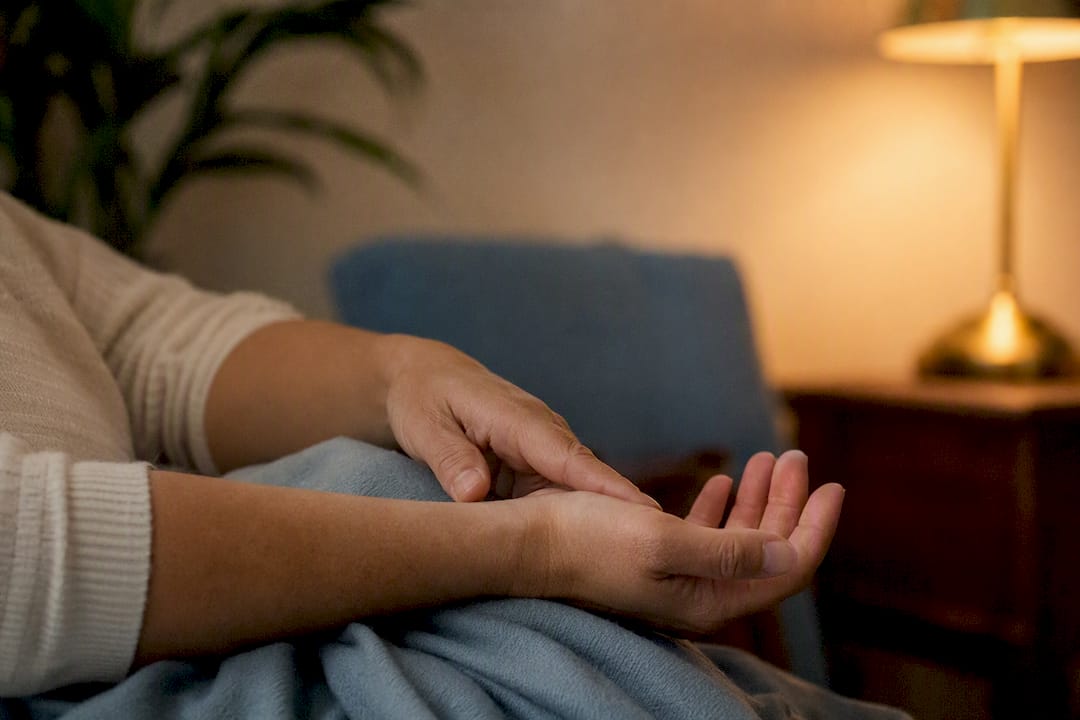
Emotionally, sessions can loosen things that have been held tightly for a while. Some clients cry without knowing exactly why, others feel a sudden clarity about a decision they’d been avoiding, and vivid or unusual dreams that night are common enough that practitioners rarely think twice about them. Mood can dip before it lifts, particularly if the session touched on something unresolved.
None of this is universal. Some people feel nothing beyond a pleasant nap, and that has no bearing on whether the session worked. Healthline notes that clinical trials rarely report side effects at all, which tells you the intense reactions some people describe sit at the edge of normal rather than being the expected outcome.
What is a Reiki healing crisis, and how long does it actually last?
The phrase “healing crisis” gets used loosely, but among Reiki practitioners it means something specific: a short spike in symptoms, tiredness, emotional rawness, even mild flu-like feelings, as the body and mind process a shift the session set off. It’s the alternative-therapy equivalent of muscle soreness after a first gym session. Uncomfortable, but framed as part of the process rather than a warning sign.
Here’s where the two perspectives need reconciling. Systematic reviews and major health authority summaries report no proven adverse effects from Reiki, yet plenty of practitioners and clients describe these short-lived aggravations firsthand. Both things can be true: population-level clinical data shows no measurable harm, while an individual can still feel rough for an afternoon.
Typical timelines look like this:
Minutes to a few hours: grogginess, thirst, mild emotional wobble
That evening to the next day: vivid dreams, tiredness, occasional headache
Up to 2 to 3 days: lingering emotional sensitivity or subtle mood shifts
If something persists beyond a week, or gets worse rather than better, that’s no longer a healing crisis. It’s a signal to speak to your GP.
Reiki aftercare: what to do in the hours and days that follow
Integration is the part people skip, and it’s the part that actually determines how you feel the next morning. Practitioners generally recommend a simple routine to help the body settle after energy work, and it doesn’t require anything complicated.
Sit quietly for 10 to 15 minutes before driving or rushing back into your day.
Drink water, more than you’d normally think to, since many people report thirst as one of the first sensations after a session.
Rest if you’re tired rather than pushing through with plans. A short nap or an early night is common self-care advice.
Eat something light within a couple of hours. Heavy or rich food alongside a still-settling nervous system is rarely comfortable.
Keep the next 24 to 72 hours gentle: a walk outdoors, some slow breathing, or simply an evening without screens does more for integration than any supplement.
Avoid alcohol and heavy caffeine for the rest of the day, since both work against the calming effect the session created.
What not to do matters just as much. Don’t skip prescribed medication or delay a medical appointment because a session left you feeling clearer. And it’s worth holding off on major decisions, resigning from a job, ending a relationship, for a day or two. Clarity felt in the hour after a session isn’t always the same as clarity that holds up once the effect settles.
Pro Tip: Keep a small notebook by the bed the night after a session. Dreams and half-formed thoughts fade fast, and looking back at a week’s worth of notes often reveals a pattern you’d otherwise miss entirely.
For a fuller picture of what the nervous system is doing during this window, see this overview of what people typically feel after energy work.
When after effects need medical attention, not just rest
Reiki sits alongside medical care, not in place of it. Guidance on Reiki safety is consistent on this point: there’s no evidence it interferes with conventional treatment, but it should never be used as a reason to delay or replace medical attention. The real risk was never Reiki itself, it’s mistaking a relaxed, clear-headed feeling for a diagnosis.
Contact your GP or emergency services if you notice:
Chest pain or severe breathlessness
Sudden, severe neurological symptoms, confusion, slurred speech, one-sided weakness
A fever that persists rather than settling within a day
Any symptom that keeps worsening instead of easing
If something feels off, tell both your GP and your Reiki practitioner. WebMD’s guidance on Reiki lists headache, nausea, and fatigue among the possible short-term sensations worth mentioning to a healthcare provider, particularly if you’re managing an existing condition.
Why Reiki after effects vary so much from person to person
Two people can have the same session and walk away with completely different experiences, and the reasons are rarely mysterious once you break them down. Session length, hands-on versus off-body technique, and how quickly a practitioner works through the chakras all shape what a client feels.
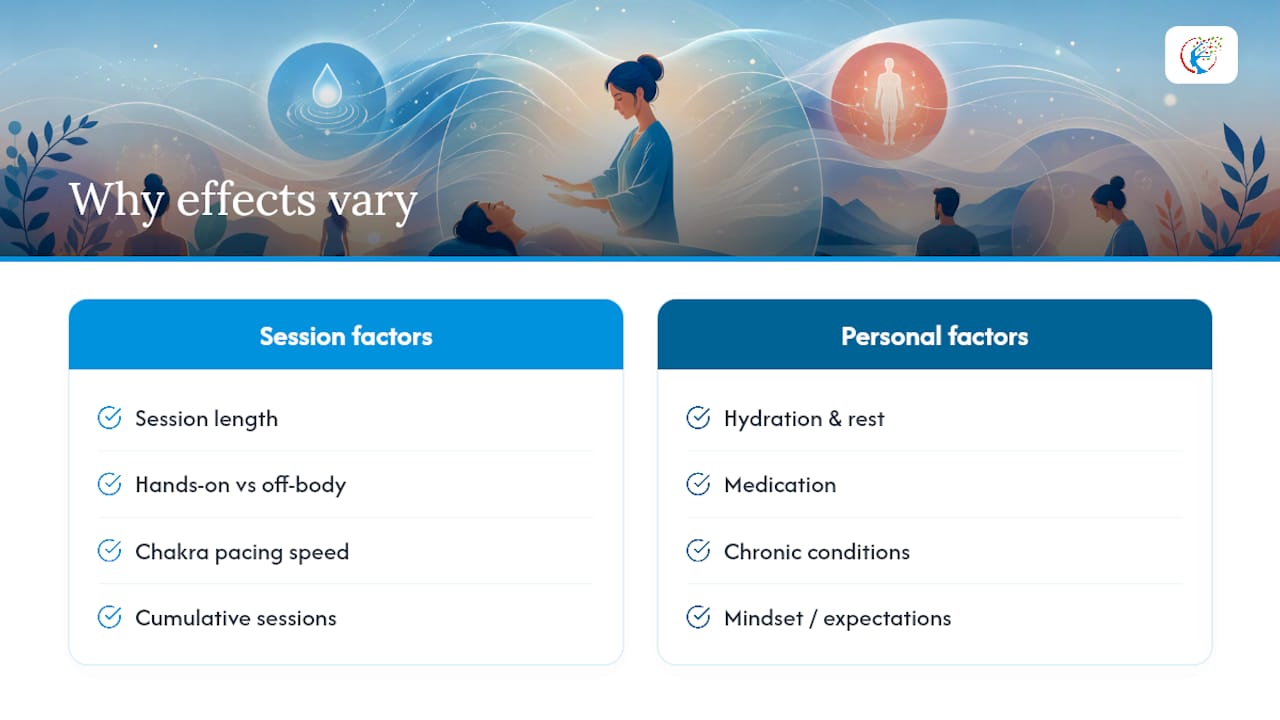
Personal factors matter just as much: how hydrated and rested you were beforehand, whether you’re on medication, any chronic condition, and even your state of mind walking in the door. Research on subjective responses to complementary therapies points to expectation and context as real drivers of what people report afterwards, not just the treatment itself. Cumulative sessions tend to build a more consistent response over time.
If a previous session left you unsettled, say so before the next one. A good practitioner will adjust pacing or technique based on your history.
A practitioner’s view on integration and what actually helps
Most sessions I run end with a short debrief, a few minutes to talk through what came up, followed by a glass of water and a note to expect tiredness that evening. Clients who journal afterwards tend to spot patterns faster than those who don’t. Gentle movement, a walk rather than a gym session, and a follow-up message a day or two later to check how things settled both make a measurable difference to how people integrate the work. Intensity of reaction has never predicted outcome in my experience; the quiet sessions often land just as deeply as the dramatic ones.
— Paul
Book a follow-up session or ask about aftercare
If reading through all of this leaves you wanting a session tailored to how your body actually responds, rather than a generic checklist, that’s exactly what a guided approach offers. Paulstebles combines Reiki with chakra balancing, cord cutting, and Quantum Healing Hypnosis, and every session includes a proper debrief plus a follow-up check-in, so integration isn’t left to guesswork on your part.
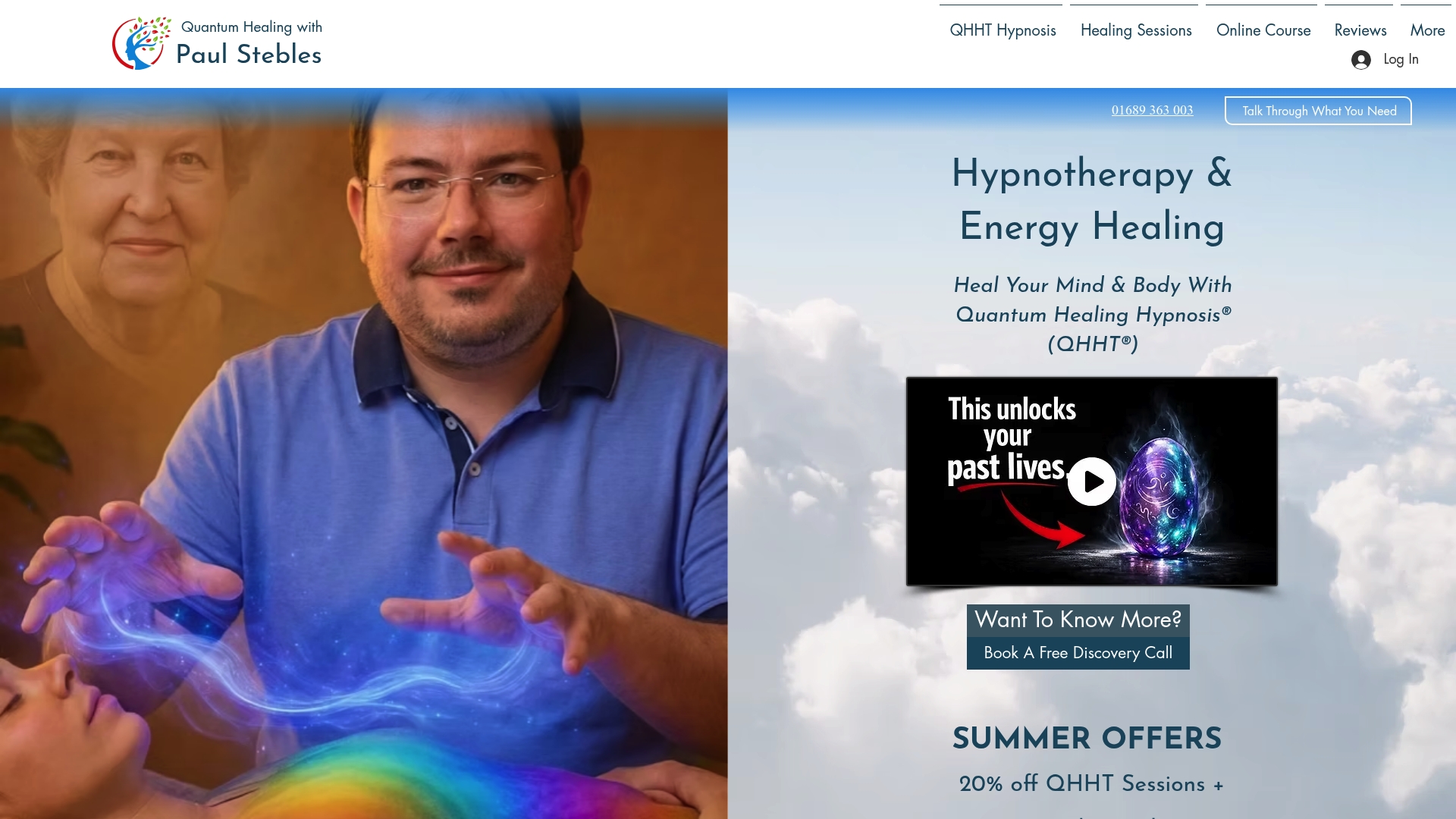
Sessions run in person across Orpington and Bromley, or remotely if travel isn’t practical, and each one is paced to your history rather than a fixed script. If you’ve had an intense reaction before, or none at all, that context shapes how the next session is run. You can read more about how energy healing sessions are structured or go straight to booking a QHHT session to get a date on the calendar.
This article is general information, not a substitute for advice from a qualified doctor. Consult a qualified healthcare professional about your own circumstances before acting on anything here.
Sources
Recommended
Comments