Reiki for Autoimmune Support: A UK Clinician's 6–8 Week Trial Approach

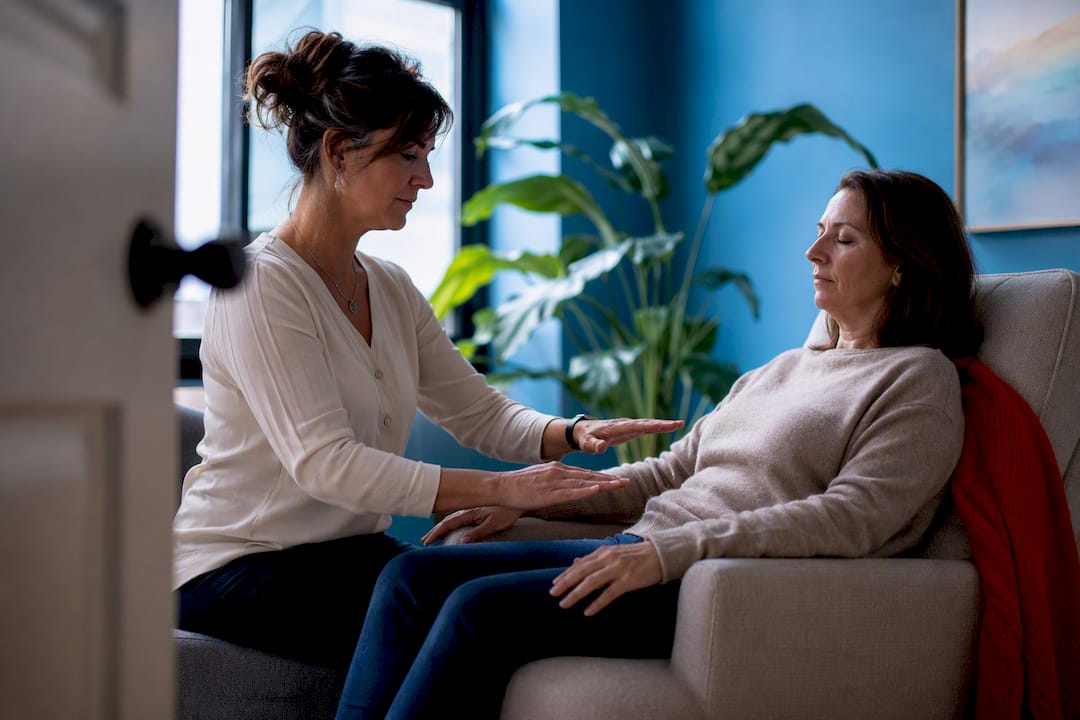
Reiki is a supportive, low-risk complementary therapy that may ease stress, improve sleep and take the edge off pain and anxiety, but it has no proven ability to cure or reverse autoimmune disease. It works alongside your existing treatment, never instead of it. Keep taking prescribed medication, tell your consultant or GP before you start, and treat any course of sessions as an experiment you track rather than a guaranteed fix.
TL;DR:
Reiki may reduce stress and improve sleep, which can help lower flare frequency but does not directly influence immune cells or disease progression.
Small studies suggest some pain and fatigue relief in fibromyalgia and related conditions, but overall evidence remains limited and inconsistent.
The therapy is generally safe for autoimmune patients if used with caution around recent surgery, infections, or implanted devices, and never as a replacement for medication.
Research is ongoing with structured trials like HEAL-SLE testing virtual Reiki, though results are not yet available to confirm effectiveness.
Treatment should be viewed as an adjunctive, experimental approach coupled with monitoring symptoms and maintaining medical treatment.
Table of Contents
What is Reiki for autoimmune symptom support?
Reiki is a Japanese energy healing practice where a practitioner places their hands lightly on or just above the body to promote relaxation. There are no needles, no manipulation, and for many people with joint pain or skin sensitivity, no direct contact needed at all. Sessions typically run for a moderate duration, though practitioners working with chronic illness often shorten this or break it into stages if lying still is uncomfortable.
You’ll come across a few formats:
In-person sessions: hands-on or hands-hovering, usually on a treatment table or in a reclined chair for people who struggle to lie flat.
Distant or virtual Reiki: delivered remotely, with the practitioner working while you rest at home, often over video call for check-ins.
Self-Reiki: a simplified routine you learn to practise on yourself between sessions.
Practitioners experienced with autoimmune conditions will ask about flare patterns and pain zones before touching anything, and will adjust pressure, position and pacing accordingly.
Can Reiki calm autoimmune inflammation through stress reduction?
The honest answer is: indirectly, and only partly. Reiki doesn’t act on antibodies or immune cells directly. What it may do is dial down the stress response that keeps inflammation running hot. This is the territory of psychoneuroimmunology, or PNI, the field studying how the nervous system, hormones and immune activity interact. Chronic stress keeps the HPA axis activated, which raises cortisol and, over time, can dysregulate immune signalling.
If a therapy genuinely lowers perceived stress and helps you sleep, that’s not a trivial side effect for someone with an autoimmune condition. Poor sleep and chronic stress are two of the most consistently reported flare triggers people describe to their rheumatologists and dermatologists.
Relaxation training generally lowers cortisol output, and that’s the plausible route through which Reiki could reduce flare severity or frequency rather than flare cause. Beyond that direct pathway, there are the non-specific benefits: better sleep quality, a lower perceived pain score, and a steadier mood. None of these reverse disease activity, but for people living with fibromyalgia, lupus or rheumatoid arthritis, they’re often the symptoms that erode quality of life the most.
What does the clinical evidence on Reiki for autoimmune disease show?
The evidence base is real but thin. Cleveland Clinic is blunt about this: Reiki can reduce stress and anxiety and support general wellbeing, but there isn’t robust evidence it cures or reverses any disease process. That’s the ceiling you should set your expectations against.
Where there’s some signal worth noting is fibromyalgia and related pain conditions. Small randomised trials have reported reductions in pain and fatigue after touch therapies including Reiki, though the studies themselves tend to be short, have small sample sizes, and struggle with blinding, since it’s hard to design a convincing placebo for hands-on energy work. A broader literature review of complementary and alternative medicine in autoimmune disease found genuinely mixed results across modalities: some patients report meaningful symptom or quality-of-life improvement, but heterogeneous study design makes it hard to draw firm conclusions.
Evidence type | What it shows | Main limitation |
Small RCTs (fibromyalgia, touch therapy) | Reduced pain and fatigue scores | Short duration, small samples |
CAM literature reviews | Mixed benefit across modalities | Heterogeneous methods, hard to compare |
Active pilot trials (e.g. HEAL‑SLE) | Testing structured virtual Reiki protocols | Results not yet published |
One trial worth watching is HEAL‑SLE, a pilot study testing weekly 20-minute virtual Reiki sessions over 8 weeks as an add-on to standard care for people with systemic lupus erythematosus. It’s a useful sign that researchers are treating Reiki as a serious adjunct worth structured testing, not dismissing it outright, even though results aren’t published yet.
Is Reiki safe if you have an autoimmune condition?
Reiki carries minimal physical risk for most people, which is a large part of its appeal. It’s non-invasive, drug-free and doesn’t interact with medication. That said, a few situations call for extra caution and a conversation with your practitioner beforehand:
Recent surgery or an open wound, where even light table positioning may need adapting.
Active infection, where you may want to postpone in-person contact.
Implanted medical devices, such as pacemakers, which some practitioners flag as needing hands-off technique only.
The one rule that matters most: never stop or reduce prescribed medication because you’ve started Reiki. Mention it to your rheumatologist, GP or specialist nurse. Most clinicians are relaxed about complementary therapies once they know you’re still following your treatment plan, and clinical guidance consistently frames Reiki as adjunctive, not a substitute. When choosing a practitioner, ask about their training lineage, whether they’ve worked with chronic illness before, and whether they keep session notes.
How to trial Reiki alongside your existing treatment
Treat it as a measured experiment, not a leap of faith. A structured trial gives you something concrete to judge rather than a vague impression of “feeling a bit better.”
Book weekly sessions for 6 to 8 weeks. This mirrors the protocol used in trials like HEAL‑SLE, which asks participants to complete at least 6 of 8 sessions to count as adherent.
Track four things before you start: sleep quality, pain level, fatigue, and mood, using a simple 1 to 10 diary.
Add a self-Reiki or breathing practice on non-session days to reinforce the relaxation response, alongside nervous system regulation techniques such as paced breathing.
Choose in-person versus remote based on your mobility and flare pattern; virtual sessions suit people whose joint pain makes travel difficult on bad days.
Pro Tip: Rate your baseline symptoms for a full week before your first session. Without that starting point, it’s genuinely hard to tell whether week six feels better because of Reiki or because your flare simply settled on its own.
How Paul Stebles adapts sessions for autoimmune clients
Paul Stebles works with clients through both Quantum Healing Hypnosis Technique sessions and standalone energy healing, including Reiki, chakra balancing and cord cutting, delivered in person and remotely. For clients managing autoimmune flares, sessions are paced around what the body can tolerate that day.
Someone dealing with joint pain or fatigue on a given day doesn’t need a rigid script. Hovering hands instead of direct pressure, shorter segments with rest breaks, and space for emotional release work all matter more than sticking to a fixed session length.
Bookings, FAQs and full service details are covered on the energy healing and quantum healing FAQ page.
When Reiki genuinely helps, and when to stay cautious
Reiki won’t touch your inflammatory markers directly, but I think its real value for autoimmune symptoms is often underestimated precisely because people expect it to do too much. Used as a stress-management tool alongside proper medical care, it can meaningfully improve how a bad week feels. Track your results, keep your medical team informed, and judge it on realistic terms rather than hope.
— Paul
Ready to try a guided energy healing session?
If reading about Reiki has left you wanting to actually feel the difference rather than just imagine it, an energy healing session is the direct next step, and it costs nothing like the ongoing commitment of a specialist referral or a private pain clinic. Paulstebles offers in-person sessions across Orpington and Bromley, plus remote Reiki for anyone whose flare pattern makes travel unpredictable.
A first booking typically starts with a short conversation about your condition, current medication, pain zones and what you’d like to get out of the session, whether that’s better sleep, calmer anxiety, or simply an hour where your body isn’t fighting itself. Bring a list of your current medications, a rough note of your flare triggers, and comfortable clothing if you’re attending in person. Some clients pair energy healing with Quantum Healing Hypnosis Technique sessions for deeper emotional release work, though the two are entirely separate offerings and neither is a prerequisite for the other.
This is one option among several for managing autoimmune symptoms, not a replacement for your treatment plan. If it sounds like a fit, book a session and bring your questions along with you.
Sources
Recommended
Comments